
Patellofemoral arthritis (PFA) and anterior knee pain affect millions worldwide, causing discomfort during daily activities like climbing stairs, sitting, or exercising. Traditional options such as pain medications, physical therapy, or steroid injections often provide only temporary relief. Platelet-rich plasma (PRP) therapy is gaining traction as a safe, regenerative alternative designed to target the root causes of inflammation and cartilage breakdown.
Methods: How PRP Was Administered
This systematic review examined 5 clinical studies with 146 patients suffering from patellofemoral arthritis or anterior knee pain. Patients received 2–3 PRP injections, spaced 1–3 weeks apart, with injection volumes ranging from 4 to 10 ml. Some protocols combined PRP with hyaluronic acid (HA) or stem cells for added benefit. Importantly, all injections were delivered under ultrasound or fluoroscopy guidance, ensuring accuracy in targeting the patellofemoral joint. Outcomes measured included pain scores (VAS), function (WOMAC, Kujala, Lysholm), and MRI imaging for cartilage quality. Across the included studies, the average length of follow-up after treatment ranged from 6 months to 24 months, with most patients demonstrating sustained improvement in pain and function throughout the follow-up period.
Results: Pain Relief and Function Gains
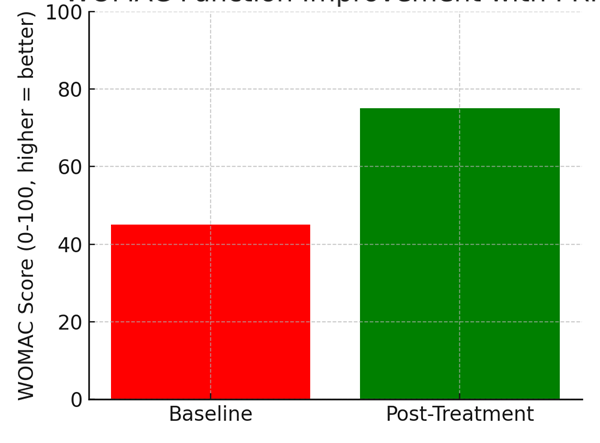
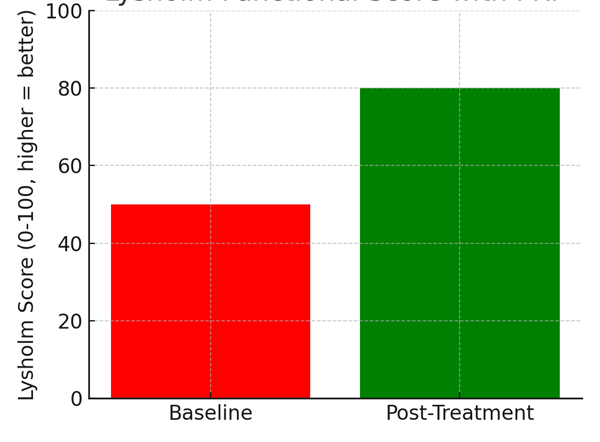
Across the reviewed studies, PRP consistently reduced pain and improved knee function. VAS pain scores improved from around 7/10 at baseline to approximately 2–3/10 after treatment. WOMAC function scores rose by 20–30 points, while Lysholm scores improved by an average of 25–30 points. MRI results in some studies suggested potential cartilage regeneration, further supporting PRP’s regenerative potential. No serious adverse effects were reported, underscoring the safety profile of PRP injections.
The following graphs illustrate the improvements:
VAS Pain Score Reduction with PRP

WOMAC Function Improvement with PRP
Lysholm Functional Score with PRP
Why This Matters
Anterior knee pain and patellofemoral arthritis are notoriously challenging to treat. PRP represents a regenerative therapy that not only reduces inflammation but also enhances tissue repair. For younger patients with early arthritis and older individuals trying to delay surgery, PRP may offer a meaningful middle ground.
Why Regenexx Cayman Leads in PRP and Regenerative Care
Regenexx Cayman is a global leader in advanced regenerative procedures. Unlike standard PRP offered in many clinics, Regenexx protocols involve carefully customized preparations designed to maximize growth factors and healing potential. Every injection is delivered under image guidance, ensuring precision and safety. Patients from around the world travel to Regenexx Cayman for evidence-based PRP and stem cell procedures that are unavailable elsewhere.
💡 Question: If a series of safe PRP injections could significantly reduce knee pain and improve function without surgery, would you choose this path over traditional treatments?
Take the Next Step
If you are struggling with persistent knee pain, it may be time to explore regenerative medicine. Contact Regenexx Cayman today to learn how our advanced PRP and stem cell treatments can help restore your mobility and keep you doing the things you love.
References