
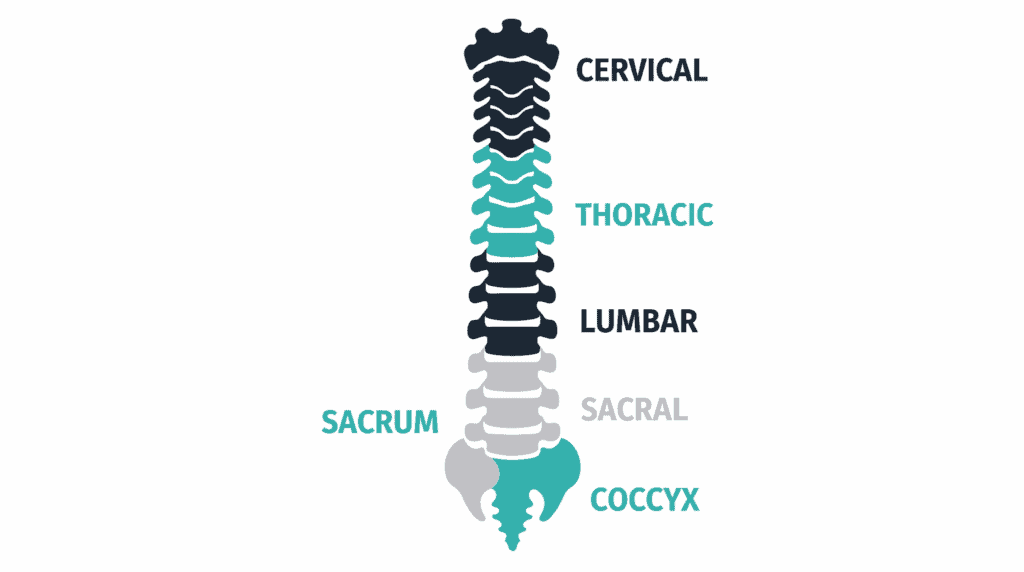
Chronic neck pain affects millions of people every year. While many patients are told their symptoms come from arthritis, muscle tension, or a pinched nerve, another important source of pain is often overlooked: the cervical intervertebral disc.
The cervical discs act as shock absorbers between the bones of the neck. When a disc develops an annular tear, bulges, herniates, or begins to degenerate, it can trigger inflammation and pain. This condition is known as cervical discogenic pain.
Patients commonly experience:
Unfortunately, cervical disc pain can be difficult to diagnose and often goes untreated because many imaging findings are mistakenly attributed to “normal aging.”
At Regenexx Cayman, we take a different approach. Rather than simply masking symptoms, we focus on identifying the underlying source of pain and exploring regenerative treatment options designed to support the body’s natural healing response.
Traditional treatments for chronic neck pain often include:
While these treatments can be helpful, they may not directly address the biological health of the injured disc itself.
Regenerative medicine seeks to change that.
Orthobiologic treatments such as platelet-rich plasma (PRP), bone marrow concentrate (BMC), and culture-expanded mesenchymal stem cells (MSCs) are designed to support tissue repair and reduce inflammation using cells and growth factors obtained from the patient’s own body.
A 2025 study published by Regenexx Cayman Physician, Dr. Pitts, Dr. Markle, and colleagues evaluated patients suffering from chronic cervical discogenic pain who underwent image-guided intradiscal injections using either bone marrow concentrate or highly concentrated leukocyte-rich platelet-rich plasma.
Unlike many spine studies that focus on only one structure, the researchers utilized a functional spinal unit approach. This concept recognizes that cervical discs, facet joints, ligaments, tendons, and supporting tissues often work together and may all contribute to pain.
Patients had:
Eighteen patients met inclusion criteria and were followed for an average of 12 months.
The results were encouraging.
Approximately 78% of patients demonstrated improved function following treatment.
Even more importantly, 65% achieved a clinically meaningful improvement that exceeded established thresholds used in spine research.
For many patients, being able to work, exercise, travel, and enjoy life again is often more important than a specific pain score.
Nearly 9 out of 10 patients reported meaningful overall improvement.
Among patients who improved, most reported greater than 50% improvement in their symptoms.
No serious adverse events were reported.
Given the complexity of the cervical spine and the proximity of critical nerves and blood vessels, this safety profile is encouraging and highlights the importance of advanced image-guided procedural techniques.
Platelet-rich plasma (PRP) is created by concentrating platelets from a patient’s own blood.
Platelets contain hundreds of biologically active proteins and growth factors involved in healing and tissue repair.
Research suggests PRP may:
At Regenexx Cayman, highly concentrated PRP preparations may be utilized to maximize the concentration of these biologically active factors.
Bone marrow concentrate contains:
These biologic components may help support tissue repair while reducing inflammatory signaling within damaged spinal structures.
The goal is not simply pain suppression but creating an environment more favorable for healing.
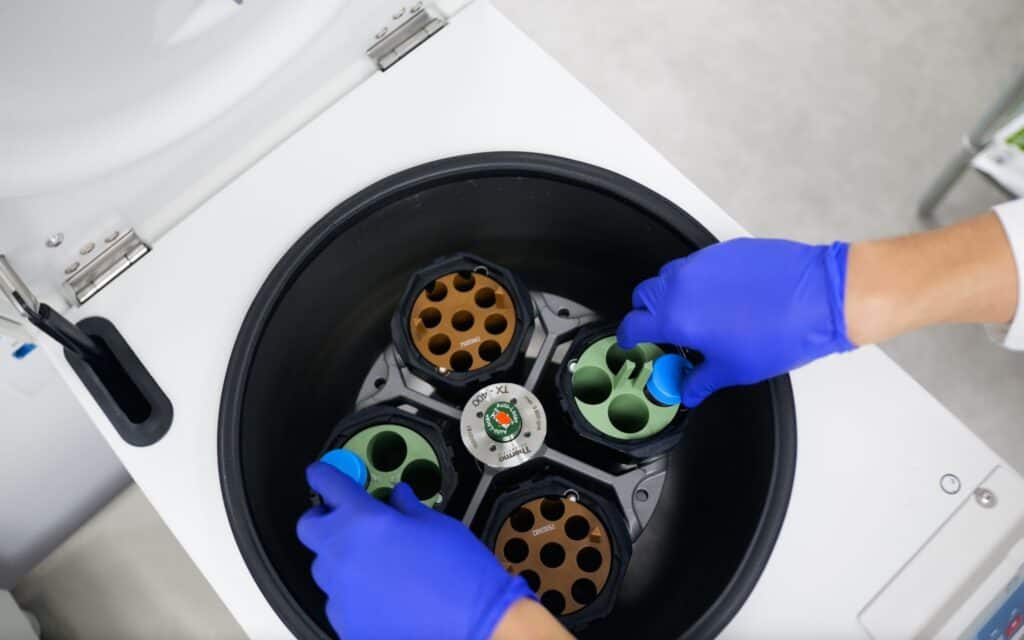
One of the most exciting developments in regenerative medicine is the use of culture-expanded autologous mesenchymal stem/stromal cells (MSCs).
Autologous means the cells come from the patient’s own bone marrow. Culture expansion allows those cells to be grown in a specialized laboratory, dramatically increasing the number of MSCs available for treatment.
Although cervical MSC research remains limited, several important lumbar spine studies have demonstrated encouraging results.
Multiple studies have investigated intradiscal injections of culture-expanded autologous MSCs for degenerative disc disease and chronic discogenic low back pain.
Researchers have reported:
Studies by Orozco, Elabd, Centeno (Regenexx founder), and more recently Hooper and colleagues (including Regenexx Cayman physicians, Dr. Williams and Dr. Pitts) have demonstrated that culture-expanded autologous MSCs may provide meaningful clinical benefit for carefully selected patients suffering from discogenic low back pain.
The biology of disc degeneration is remarkably similar throughout the spine.
Whether located in the neck or low back, injured discs typically demonstrate:
MSCs may help improve this environment through the release of anti-inflammatory and regenerative signaling molecules.
Importantly, MSCs should not be viewed as a way to “grow a brand-new disc.” A more realistic goal is to improve disc health, reduce inflammation, support tissue repair, and improve function.
As research continues to evolve, culture-expanded autologous MSCs may become an increasingly important option for patients seeking alternatives to surgery.
When symptoms become severe, patients are often told they may need surgery.
The two most common cervical surgical procedures are:
Cervical Fusion
Fusion permanently joins two or more vertebrae together.
Potential benefits include:
Potential drawbacks include:
Cervical Disc Replacement
Artificial disc replacement preserves more motion than fusion and may reduce adjacent level stress.
However, it still requires:
Regenerative procedures are fundamentally different from surgery.
Instead of removing tissue or implanting hardware, biologic treatments seek to improve the health of the injured tissue itself.
Potential advantages include:
This does not mean biologics replace surgery.
Patients with severe spinal cord compression, progressive neurologic deficits, major instability, fractures, tumors, or other serious pathology may still require surgical intervention.
However, many patients with chronic cervical disc pain may benefit from exploring regenerative options before committing to a permanent surgical procedure.
Not all regenerative medicine procedures are the same.
At Regenexx Cayman, treatment plans are built upon three core principles:
1. Precise Diagnosis
Successful outcomes begin with identifying the true source of pain.
Neck pain may arise from:
Understanding the underlying diagnosis is critical.
2. Advanced Imaging Guidance
The cervical spine is one of the most technically demanding areas in medicine.
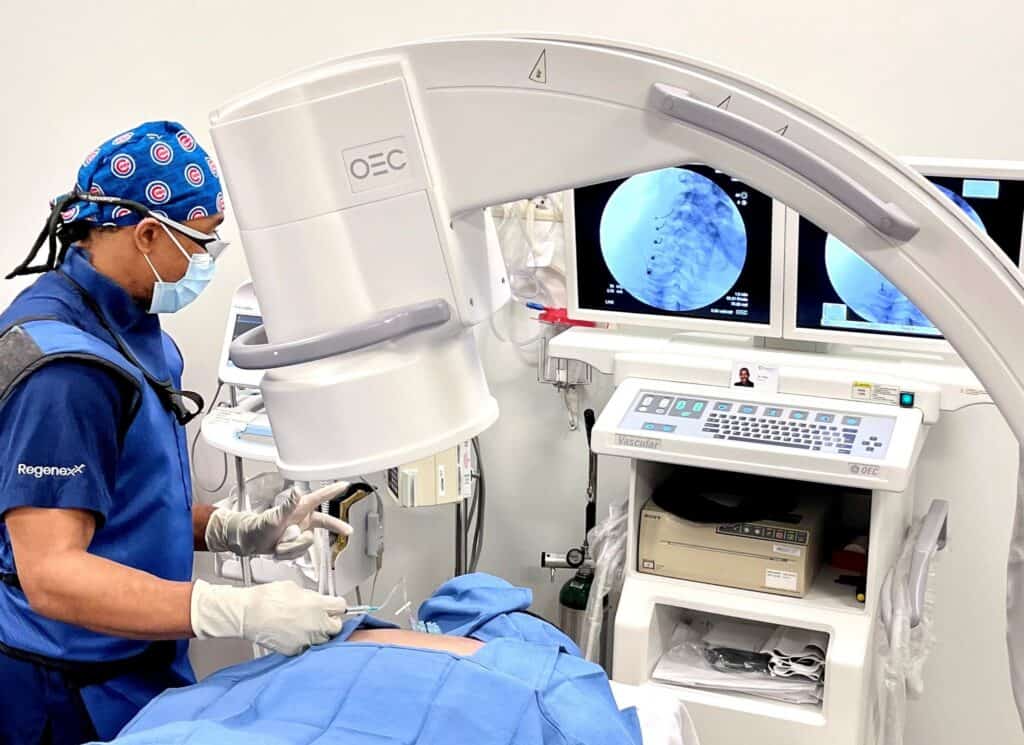
Procedures are performed using advanced image-guidance techniques designed to maximize precision and safety.
3. Treating the Functional Spinal Unit
Many patients have multiple contributing pain generators.
Instead of focusing exclusively on the disc, treatment plans may address the broader cervical functional spinal unit, including supporting ligaments, joints, and stabilizing structures when appropriate.
Historically, patients with cervical disc pain often faced a difficult choice: Continue living with symptoms or undergo surgery.
Advances in regenerative medicine may be creating a third option.
While larger clinical trials are still needed, the growing body of evidence supporting PRP, bone marrow concentrate, and culture-expanded autologous MSCs suggests that biologic treatments may play an increasingly important role in the future of spine care.
The goal is not merely symptom suppression. The goal is to support the health of the tissue itself.
If a painful cervical disc could potentially be treated using your body’s own healing cells and growth factors before considering surgery, would you want to explore that option first?
If you are suffering from chronic neck pain, cervical disc degeneration, annular tears, disc bulges, or persistent arm symptoms, contact Regenexx Cayman to learn whether advanced regenerative medicine treatments may be appropriate for your condition.
Our team can help determine whether PRP, bone marrow concentrate, culture-expanded autologous MSCs, or other orthobiologic procedures may be suitable options based on your specific diagnosis and goals.
Written by Dr. John Pitts, Regenexx Cayman Physician.